



Web Design Jargon Decoded: What ‘Responsive’, ‘SEO’, and ‘UX’ Actually Mean for Your Business
Navigating the world of web design can feel like learning a new language, especially when terms like Responsive, SEO, and UX are thrown around. If you’re a business owner, you don’t need a computer science degree, but you do need to understand how these concepts directly impact your bottom line.
Let’s cut through the jargon and explain what these three pillars of modern web design truly mean for your business success.
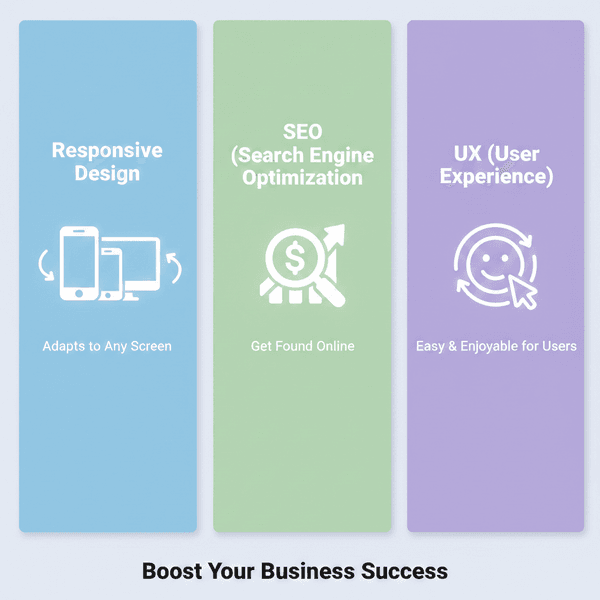
Responsive Design: Your Website on Any Screen
When a designer talks about a responsive website, they’re simply talking about a site that works well and looks great no matter what device (phone, tablet, or desktop) your customer is using.
What it is:
A technical approach to web design where the layout automatically adjusts and reflows its content, images, and navigation to fit the size of the screen.
Why it matters to your business:
- Keeps Customers: Over half of all website traffic comes from mobile devices. If your site is hard to use on a phone, customers will leave and go to a competitor.
- Google Likes It: Google uses mobile-friendliness as a ranking signal. A non-responsive site will be penalized in search results, making it harder for new customers to find you.
SEO (Search Engine Optimization): Being Found Online
SEO is the process of optimizing your website to rank higher in search engines like Google, Bing, and DuckDuckGo. Think of it as making it easy for search engines to understand what your business does so they can recommend you to the right people.
What it is:
A collection of strategies—including using the right keywords, creating quality content, and ensuring fast loading times—that improve your website’s visibility in organic (non-paid) search results.
Why it matters to your business:
- Free, Targeted Traffic: When you rank highly for a term like “best coffee shop in [Your City],” those searchers are highly motivated potential customers—and you didn’t have to pay for the ad click.
- Builds Trust: Users inherently trust brands that appear at the top of search results. A strong SEO presence establishes your business as an authority in your field.
UX (User Experience): Making Your Site Easy and Enjoyable
UX, or User Experience, is all about how a person feels when they interact with your website. It asks questions like: Is it easy to find your store hours? Is the checkout process intuitive? Does the website feel professional and trustworthy?
What it is:
The practice of designing the entire process a user goes through to achieve their goal (e.g., making a purchase, booking an appointment) to be as efficient, effective, and satisfying as possible.
Why it matters to your business:
- Increases Sales (Conversions): A good UX removes obstacles. If a customer can easily find the ‘Buy Now’ button and the steps are clear, they are more likely to complete the transaction.
- Reduces Frustration & Support Costs: A well-designed site answers questions before they are asked, reducing the number of confused calls or emails your staff has to handle.
The Bottom Line
These terms aren’t just technical buzzwords; they are direct investments in your business’s success:
- Responsive Design = You don’t lose customers because they’re on a phone.
- SEO = New customers find your business without you paying for an ad.
- UX = Visitors stay longer, get what they need, and become paying customers.
When you hire a web designer or agency, make sure they are prioritizing these three pillars. They are the foundation of a high-performing website that truly serves your business goals.
Are you ready to transform your website from a digital brochure into a powerful business tool? I can help you find resources or professional services to audit your current site for responsiveness, SEO, and UX!