



Why Your Competitor’s Website Ranks Higher on Google (And How to Fix It)
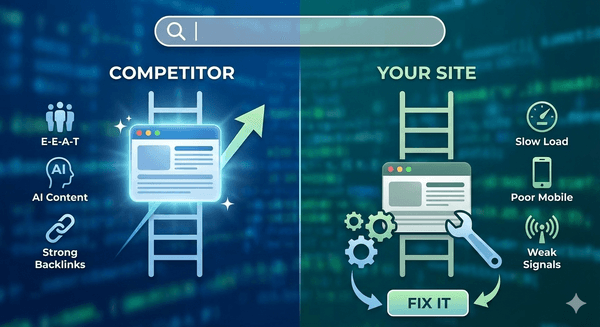
In the digital battleground of 2026, ranking higher on Google isn’t just about bragging rights – it’s about business survival. If your competitors are consistently outranking you, they are effectively siphoning off your potential customers, leads, and revenue.
But why are they winning? It’s rarely just one magical trick. More often, it’s a combination of strategic advantages you might be overlooking. The good news? Once you identify these gaps, you can implement a targeted plan to close them.
Here are the top reasons your competitor’s website is outperforming yours on Google, and actionable steps you can take to reclaim your position.
1. They Have Stronger “E-E-A-T” Signals (Experience, Expertise, Authoritativeness, Trust)
Google’s E-E-A-T guidelines are more critical than ever, especially with the rise of AI-driven search (SGE). If your competitor’s content is perceived as more trustworthy and credible, Google will prioritize it.
Why they win:
- Demonstrated Expertise: Their content is written by or clearly attributed to verifiable experts in the field (e.g., doctors for medical advice, certified financial planners for investment tips).
- Real-world Experience: They showcase practical experience, case studies, and unique insights that go beyond surface-level information.
- Authoritative Backlinks: Reputable sites in their industry link to their content, signaling authority.
- Transparent Trust Signals: Clear contact information, awards, certifications, and strong privacy policies build trust.
How to fix it:
- Author Bios: Ensure every piece of content has a detailed author bio, highlighting their credentials and experience. Use schema markup for “Person” to help Google understand.
- Original Research & Data: Conduct surveys, analyze proprietary data, or offer unique perspectives no one else has.
- Build an Expert Network: Collaborate with influencers or industry leaders to create content, increasing your perceived expertise.
- Secure High-Quality Backlinks: Focus on earning links from authoritative sites, not just any site. Guest posting on relevant, high-DA platforms is a good start.
- Enhance Trust Signals: Display security badges, customer testimonials, professional affiliations, and clear contact details prominently.
2. Their Content Strategy is Hyper-Targeted & AI-Optimized
Gone are the days of keyword stuffing. Your competitor might be ranking higher because their content directly answers user intent and is structured for AI search engines.
Why they win:
- Deep Keyword Research: They understand the nuanced queries their audience uses, including long-tail and conversational keywords.
- Comprehensive Content: Their articles thoroughly cover topics, leaving no stone unturned, often creating “pillar pages” that link to supporting content.
- Optimized for SGE/AI: Their content is structured to easily provide direct answers for Google’s Search Generative Experience, using clear headings, bullet points, and summary boxes.
- Freshness & Updates: They regularly update their content, ensuring it remains current and accurate.
How to fix it:
- Advanced Keyword Research: Use tools to identify not just keywords, but user questions and intent. Look for semantic keywords Google associates with your main topics.
- Content Audits & Gap Analysis: Identify topics your competitors cover that you don’t. Find areas where your content is superficial compared to their in-depth guides.
- Adopt “Answer Engine Optimization” (AEO): Structure your content with clear, concise answers to potential questions, using FAQs and “People Also Ask” sections.
- Content Clusters: Organize your content around core topics, with a main “pillar” page and several supporting articles linked internally.
- Regular Content Refresh: Schedule quarterly reviews of your top-performing content. Update statistics, add new sections, and improve clarity.
3. They Have a Superior Technical SEO Foundation
Even the best content won’t rank if Google’s crawlers can’t easily access and understand your website. Your competitor might have a cleaner, faster, and more crawlable site.
Why they win:
- Blazing Fast Load Times: Their pages load in under 2 seconds, reducing bounce rates and improving user experience (a key ranking factor).
- Mobile-First Design: Their website is flawlessly responsive and optimized for mobile devices, which Google prioritizes.
- Clean Site Architecture: A logical, easy-to-navigate site structure helps Google understand the relationship between pages.
- No Indexing Errors: They regularly monitor Google Search Console for crawl errors, broken links, or issues preventing pages from being indexed.
- Robust Schema Markup: They use structured data to tell Google exactly what their content is about (e.g., product, service, review, FAQ).
How to fix it:
- Speed Optimization: Compress images, leverage browser caching, minify CSS/JS, and consider a Content Delivery Network (CDN).
- Mobile Optimization: Use Google’s Mobile-Friendly Test and PageSpeed Insights to identify and fix mobile usability issues.
- Internal Linking Strategy: Create a strong internal linking structure that guides users and search engines through your site, distributing “link equity.”
- Google Search Console: Regularly monitor your Search Console for errors, coverage issues, and performance insights.
- Implement Schema Markup: Use tools to generate and implement relevant schema for your business type, products, services, and content.
4. They Possess a Stronger Off-Page SEO Profile (Backlinks & Mentions)
While content is king, backlinks are the kingdom’s highways. If more authoritative websites link to your competitor, Google sees them as a more credible source.
Why they win:
- High-Quality Backlinks: They have links from established, relevant websites with high Domain Authority (DA).
- Diverse Link Profile: Their backlinks come from a variety of sources (blogs, news sites, industry resources, directories), not just one type.
- Brand Mentions: Even unlinked mentions of their brand across the web contribute to their authority.
How to fix it:
- Backlink Gap Analysis: Use tools like Ahrefs or SEMrush to see which sites link to your competitors but not to you. Target these sites for outreach.
- Broken Link Building: Find broken links on reputable websites, create superior content for that topic, and suggest they replace the broken link with yours.
- Resource Page Link Building: Identify “resource pages” in your industry and offer your valuable content as a linkable resource.
- Digital PR: Create shareable content (e.g., original research, infographics, unique tools) that naturally attracts media attention and backlinks.
- Guest Posting: Write high-quality articles for other authoritative websites in your niche, including a link back to your site.
Conclusion: It’s a Marathon, Not a Sprint
Outranking your competitors on Google requires a consistent, multi-faceted approach. There’s no single silver bullet, but by systematically addressing the areas where your competitors excel, you can build a robust SEO strategy that drives long-term results.
Start by performing a thorough SEO audit of your own site and analyzing your top competitors. Identify their strengths and your weaknesses, then prioritize your efforts. With dedication and the right strategy, you can turn the tables and start converting your competitors’ traffic into your own.