



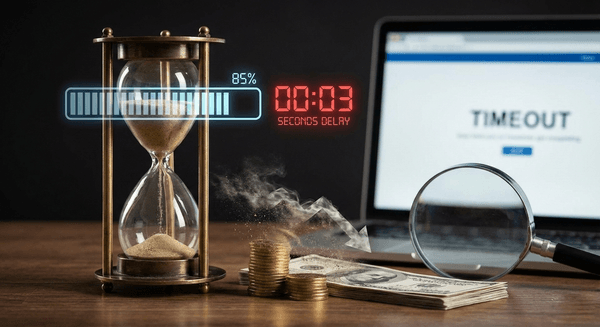
The Hidden Cost of a Slow Website: What 3 Extra Seconds Actually Costs You
In the digital world, time isn’t just money—it’s survival. We’ve all been there: you click a link, the screen stays white for a beat too long, and you hit the “back” button before the header even loads.
To a user, it’s a minor annoyance. To a business owner, that three-second delay is a silent revenue killer. Here is the breakdown of what those extra seconds are actually costing your bottom line.
1. The Conversion Cliff
The relationship between speed and sales is brutal. Research consistently shows that the first five seconds of page-load time have the highest impact on conversion rates.
- The 7% Rule: A mere one-second delay in page response can result in a 7% reduction in conversions.
- The Math: If your site generates $10,000 per day, a one-second delay could cost you $250,000 in lost sales every year.
When you hit the three-second mark, you aren’t just losing a few impatient clicks; you are losing a massive percentage of your “ready-to-buy” audience.
2. Your Ad Spend is Leaking
If you are running paid ads (Google Ads, Meta, etc.), site speed is the difference between a high ROI and throwing money into a void.
When a user clicks your ad and the landing page takes more than three seconds to load, the “bounce” happens before your tracking pixel even fires. You’ve paid for the click, but the user never even saw your offer. Effectively, a slow site increases your Customer Acquisition Cost (CAC) because you have to pay for more clicks just to get one person to stay long enough to read your headline.
3. The “SEO Tax”
Google’s primary goal is to provide a great user experience. If your site is slow, Google views it as a “bad” result.
Through Core Web Vitals, Google uses page speed as a significant ranking factor. A three-second delay doesn’t just annoy users; it pushes you down the Search Engine Results Page (SERP).
The Reality: Being on page two of Google is functionally the same as being invisible. If your speed isn’t up to par, you are paying an “invisible tax” in the form of lost organic traffic.
4. Brand Erosion and Trust
Speed is a psychological signal. A fast website feels professional, secure, and reliable. A slow website feels outdated, buggy, or—at worst—untrustworthy.
- First Impressions: For a new visitor, your load speed is their first interaction with your brand.
- Customer Loyalty: 79% of customers who are dissatisfied with website performance are less likely to buy from the same site again. You aren’t just losing the sale today; you’re losing the Lifetime Value (LTV) of that customer.
How to Reclaim Your Revenue
You don’t need a total site overhaul to see improvements. Most “speed leaks” come from three main areas:
- Image Optimization: Large, uncompressed images are the #1 cause of bloat.
- Excessive Plugins/Scripts: Every “extra” feature adds a weight to your load time.
- Cheap Hosting: If your server is slow, your site will never be fast, no matter how much you optimize.
The Bottom Line
In 2026, “fast enough” is no longer an option. Every second over two seconds is a direct withdrawal from your bank account. Speed is no longer a technical “nice-to-have”—it is a core pillar of your sales strategy.